
Post factum News – week 2
7 August 2026
World’s AI and technology stocks declined in July after reaching record levels in June.
- South Korea’s market index fell 44% from its June peak.
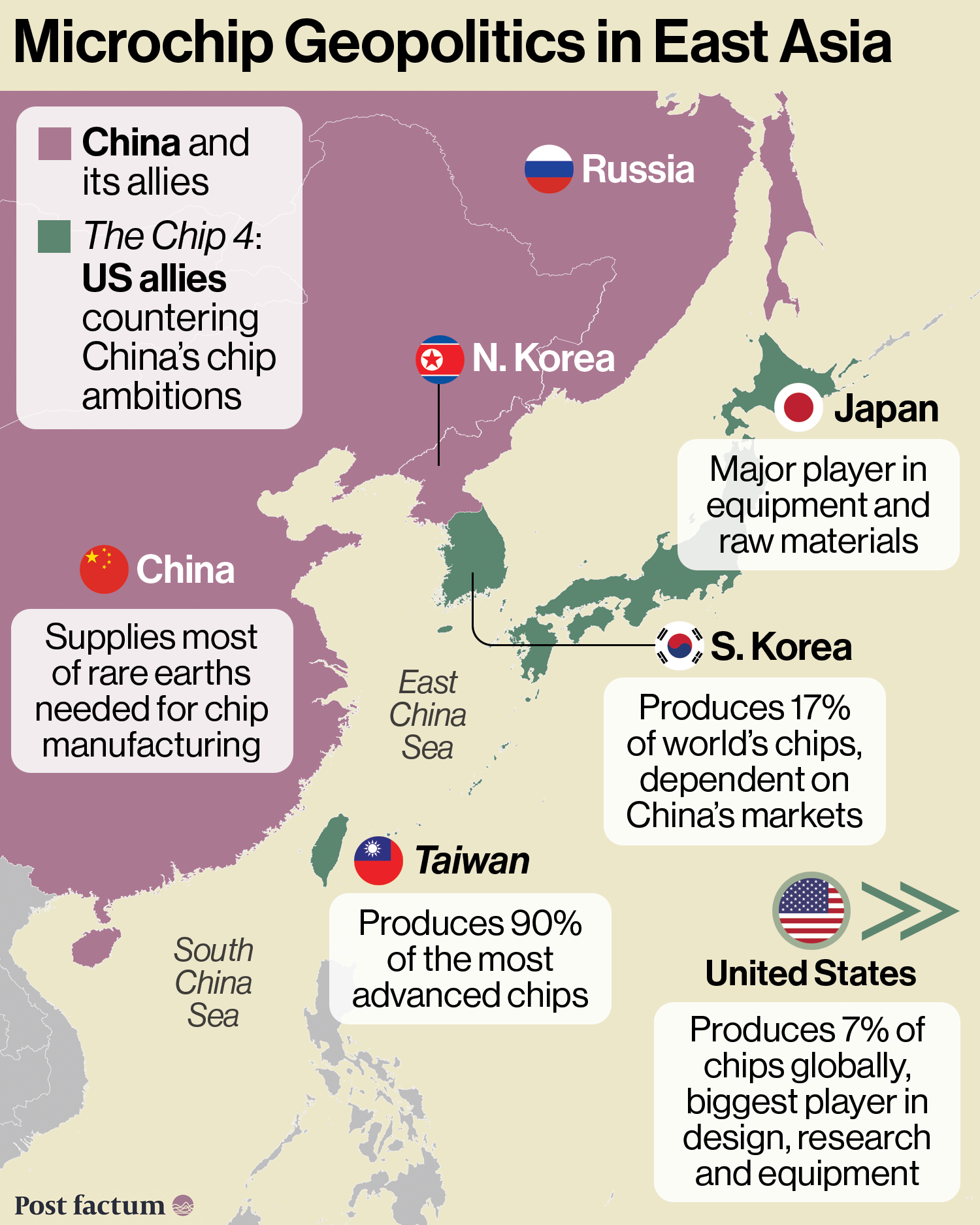
The sell-off was the sharpest around 27–29 July on the news of China’s advancements in microchips:
- Home-made DUV lithography: first reports (including on our own News Hub) suggested that China re-created a machine needed for advanced microchip making, previously unique to the Dutch firm ASML.
- IPO of a memory maker: China’s CXMT raised $9B for 7% of its shares, then grew 500% on the first day of trading, and further to a $500B valuation.
The AI sell-off reversed in August, but not all types of companies benefited.
The global technology market has been affected by a shortage of memory chips, also called DRAM.
- Memory chips are the same in all smart electronic devices, from TVs to AI data centres.
The demand for DRAM jumped because of the exponential data centre build-out, as well as the growth of other sectors like electric cars.
The supply is limited, as new factories (fabs) take 3–4 years to build, which pushed up the prices.
Memory prices are expected to stay high until the end of 2027.
Because of this, investors have recently favoured companies that either (1) sell memory chips or (2) have profits unaffected by the DRAM deficit, such as selling computing capacity.
- Consumer electronic devices have increased in price due to the memory shortage since late 2025.
US Missile Stocks Run Low
This week, reports came out on the extensive use of various missile types by the US during the Iran War.
As a result, it is now facing a shortage of a number of needed munitions, especially air defence missiles for Patriot and THAAD systems.

Here is what we know about the stocks today:
- Patriot: around 800 left, out of around 2,200 pre-war.
- THAAD: 250 remaining, from the stock of 452.
There are also missiles used for attacking targets, including enemy launch sites and air defences.
- ATACMS: 3,700 is the absolute total made since 1988; around 800 remained in April 2026, and a Reuters source says most of that has been used since.
- Tomahawk: out of the 3,000 missiles pre-war, around half remains, according to that same source.
These missiles are expensive to make, and their production cannot be sped up quickly.
A Patriot missile used to take down a drone creates cost asymmetry that benefits the attacker.

Ukraine
Here is where this lack of air defence missiles shows.
Ukraine intercepted around 5% of Russian ballistic missiles launched at it so far this month.
President Zelenskyy has been campaigning for 300 US Patriot missiles to be sent to Ukraine, so far unsuccessfully.
President Trump promised Ukraine a licence to produce Patriot missiles itself but later went back on the promise; the licence would not have produced new missiles in the short term anyway.
Russia has been targeting Ukrainian cities and energy infrastructure, as well as logistics hubs.
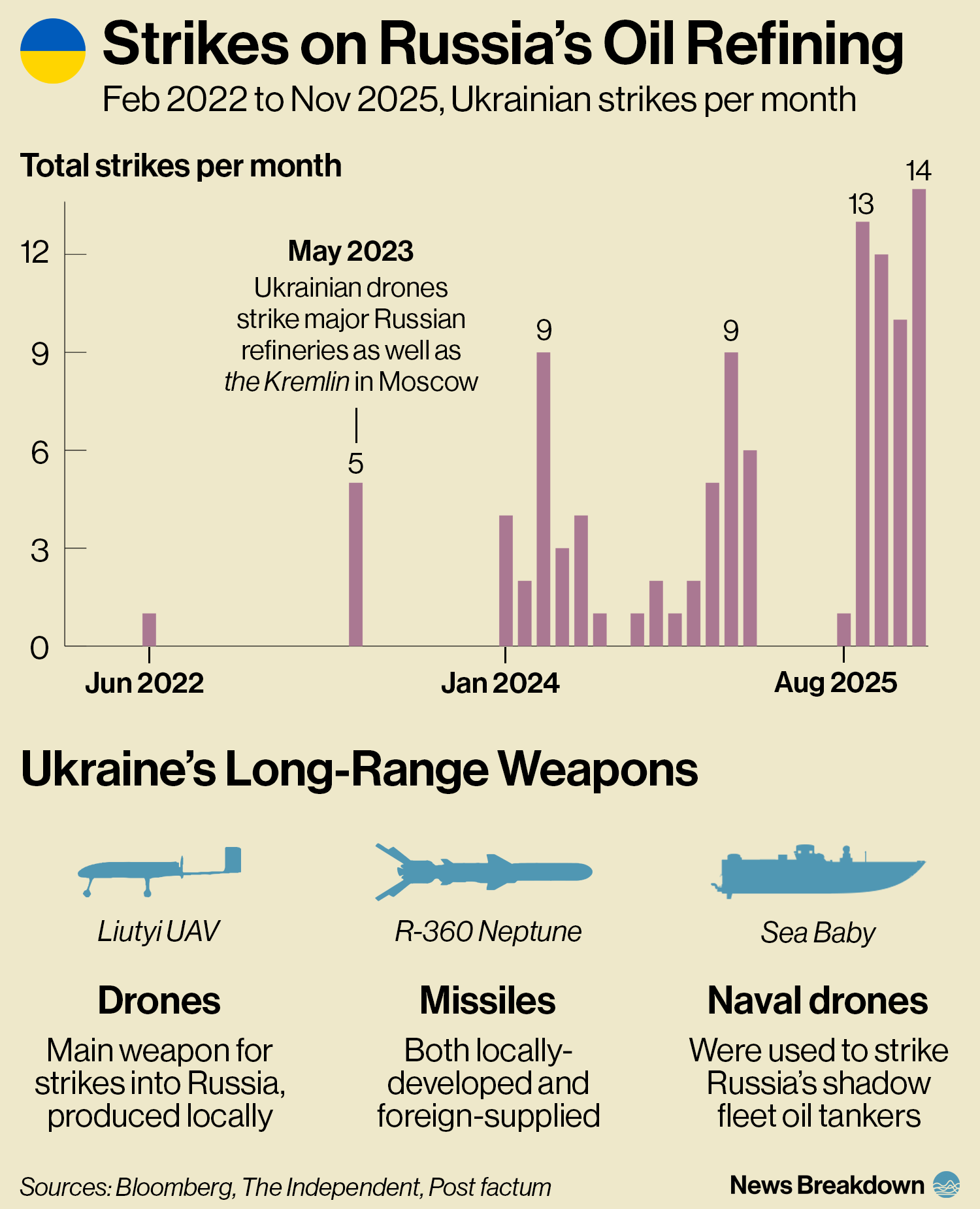
Ukraine has been targeting Russian oil refineries, e-commerce warehouses and shadow fleet ships in the Sea of Azov.
An attack on Ukrainian planes carrying military munitions at Leipzig airport, Germany, was narrowly prevented this week, as a bus driver knocked down the explosives-laden drone.
Iran
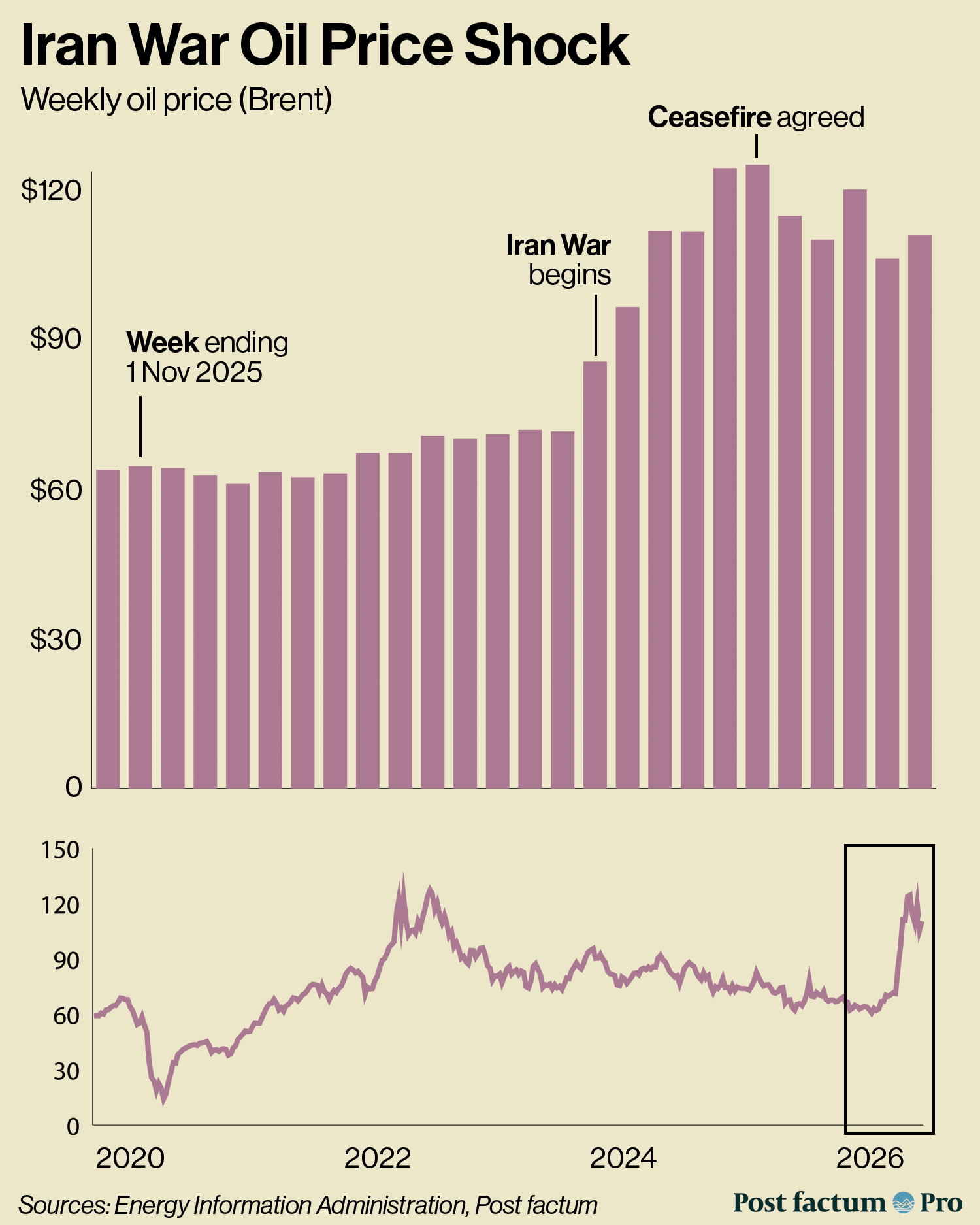
The US has not struck Iran for over a week, and a short-term deal over re-opening Hormuz was reported to be close to agreement.
The deal could give Iran control over incoming shipping, while outgoing traffic would pass through Omani waters.
Oil prices cooled on prospects of a US–Iran deal, as oil refining and fuel costs neared all-time records.
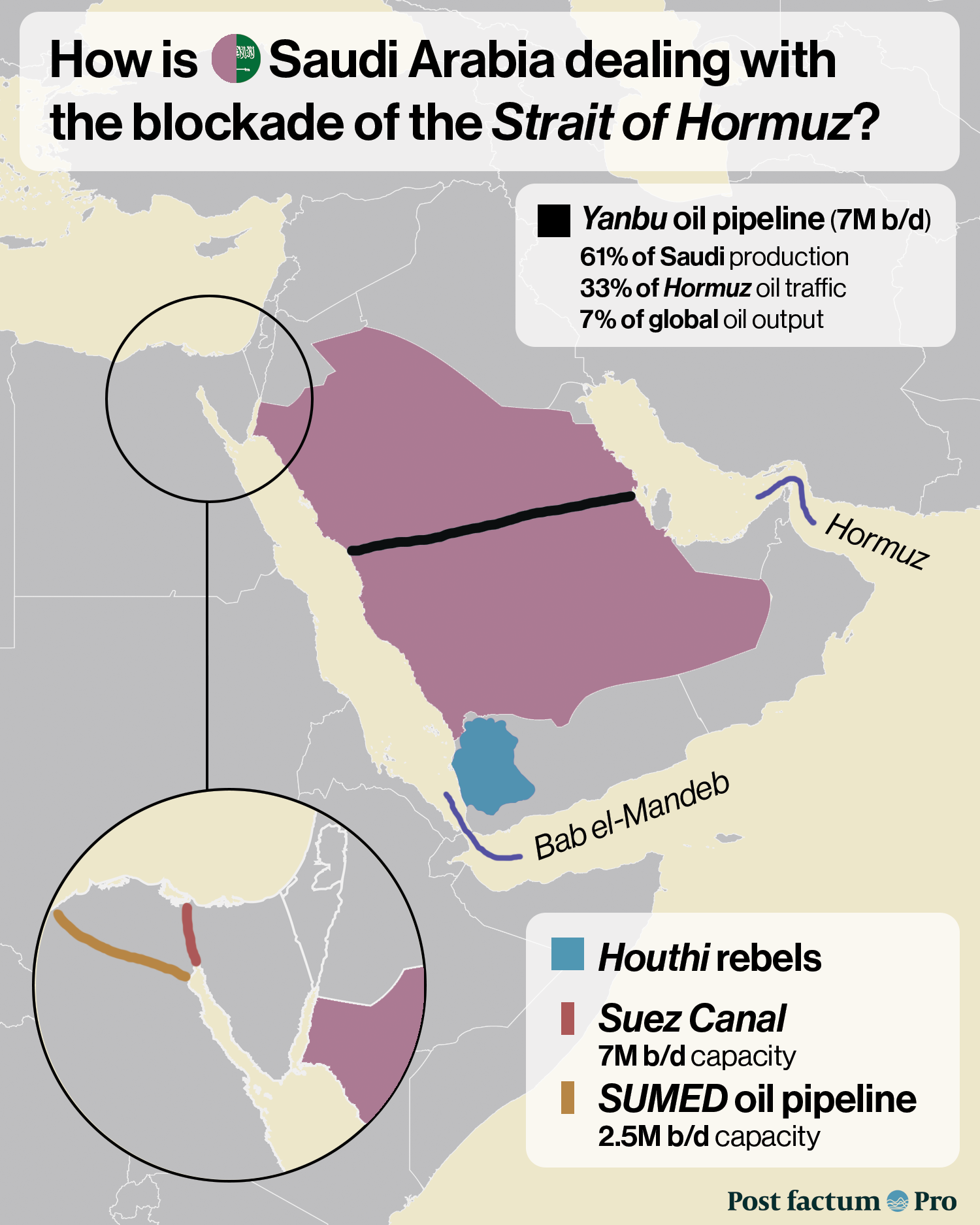
Houthi attacks on commercial ships in the Bab el-Mandeb continued, and the traffic in the strait fell.

Thank you for reading!