
Geopolitics of India
3 Nuclear Powers and 3 Billion People
March 22, 2026
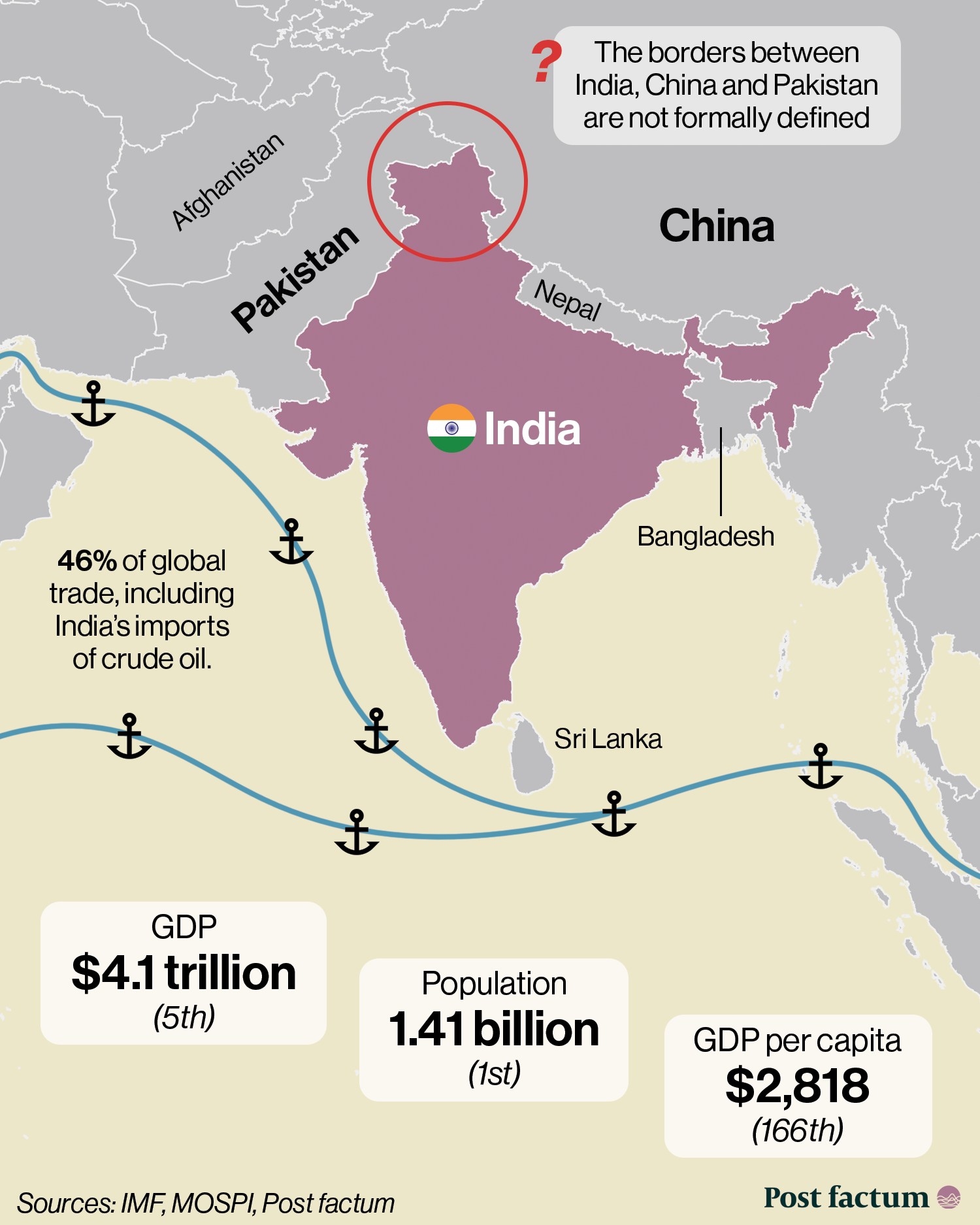
India is the largest country by population, the 5th largest economy and one of 9 states with nuclear weapons.
It borders 2 other nuclear states in China and Pakistan.
Why is India important?
Population: India passed China as the most populous country in 2023, with over 1.4 billion people.
Nuclear weapons: India has about 180 warheads and a no-first-use policy, except in response to a large chemical or biological attack.
Economy: India's GDP is about $4 trillion (5th globally). Adjusted for purchasing power, it is the 3rd largest, at $17.7 trillion.
Democracy: over 640 million people voted in the 2024 election, the largest democratic process in the world.
Narendra Modi has been Prime Minister since 2014, leading the Hindu-nationalist BJP party.
In the 2024 election, the BJP lost its majority in parliament and formed a coalition government for the first time under Modi.
About 80% of the country is Hindu, while 15% of the population is Muslim.
Liberalisation: In 1991, India nearly ran out of foreign currency reserves after an oil price shock and the Soviet Union's collapse, and decided to open its economy to foreign trade and investment.
Since then, India's foreign policy has been shaped by its conflict with Pakistan, a border dispute with China, and balancing ties with Russia and the US.
India and Pakistan
India and Pakistan have fought 4 wars since 1947, when the British divided the region into a Hindu-majority India and a Muslim-majority Pakistan.
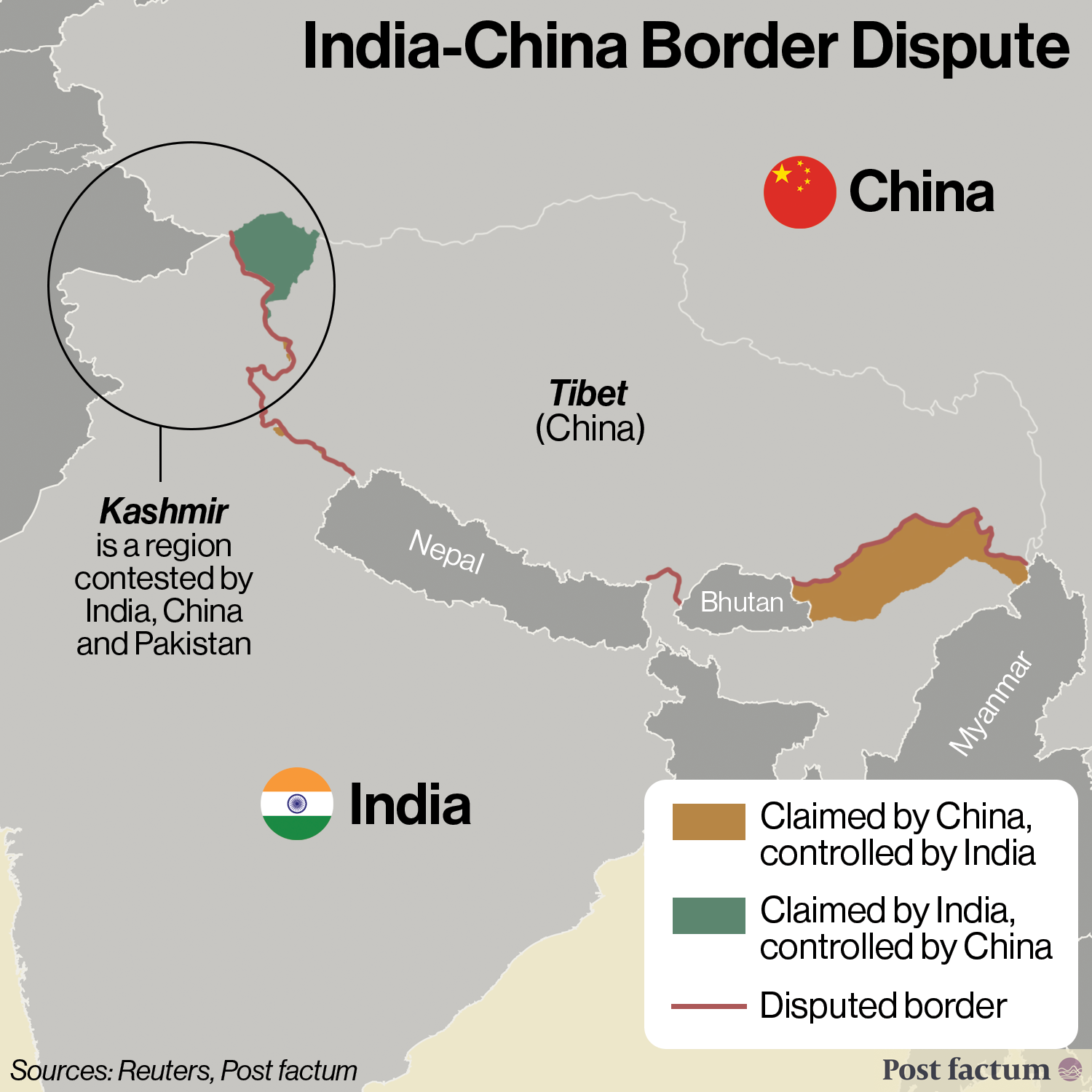
The region of Kashmir was split between the two countries, and all claim it in full, with some parts now also controlled or claimed by China.
India tested its first nuclear weapon in 1974, and Pakistan followed in 1998.
Pakistan deliberately refuses to rule out using nuclear weapons first, keeping its conditions for use unclear.
In April 2025, terrorists killed 26 civilians (mostly tourists) in Indian-administered Kashmir, the deadliest attack on Indian territory since 2008.
India accused Pakistan of hosting the group responsible and launched military strikes on 7 May 2025.
The 4-day conflict included air battles, missiles and drone strikes across several regions.
A ceasefire was reached on 10 May 2025.
India Balancing between China, Russia and the US
India does not formally ally with any one power, instead keeping close ties with competing countries at the same time.
This approach is sometimes called multi-alignment.
In the 1960s, India co-founded a movement of neutral countries, choosing not to join either the US or Soviet military blocs.
Today, India is a core member of BRICS, a group pushing for multipolarity.
China and India have 3,500-km of disputed border.
In 2020, a clash killed 20 Indian soldiers and at least 4 Chinese soldiers, the deadliest encounter between the two in decades.
India, the US, Japan and Australia cooperate through a group called the Quad.
Russia is India's largest weapons supplier, a relationship going back to the Cold War.
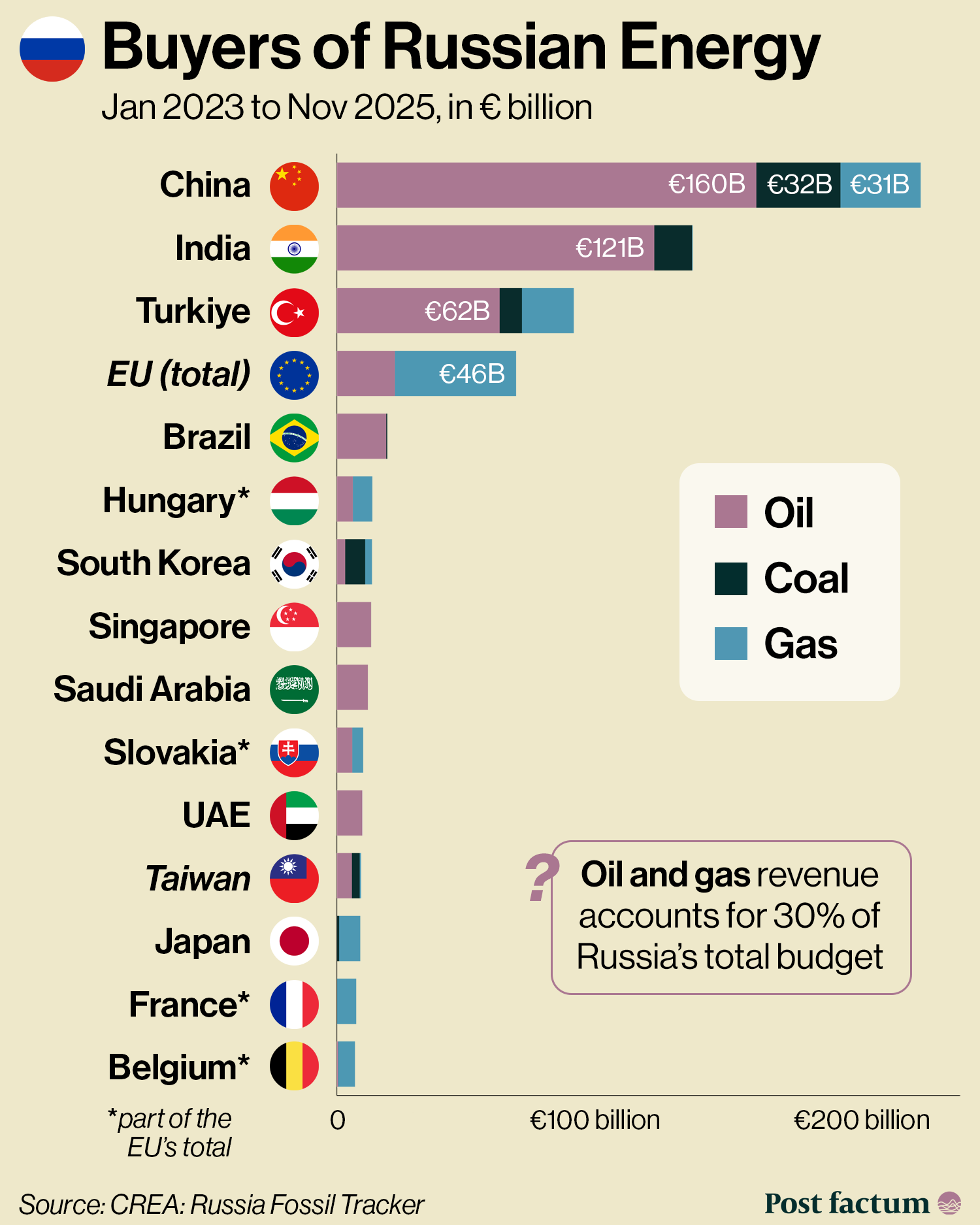
After Russia's 2022 invasion of Ukraine, Indian imports of Russian oil grew from 2% to about 36% of total crude imports by 2024.
India is the world's 3rd largest buyer of oil, importing about 87% of its consumption, making it dependent on the supply and shipping of oil.
In 2025, the US added tariffs of up to 50% on Indian goods, as part of broader tariff increases on countries with large trade surpluses, as well as for buying Russian oil.
In early 2026, India and the US announced a trade deal with tariffs proposed to drop to 18%.
In exchange, India has agreed to stop buying the Russian oil.
However, this has not been fully confirmed.
After the war in Iran began in February 2026, the US allowed India to purchase Russian oil in the short-term to reduce the global prices of oil.
Economy and domestic politics
India's economy grew at about 6-7% per year over the past decade, making it one of the fastest-growing large economies.
Services (like IT or business services) account for over 50% of India's economy.
In 2014, the government launched a program to grow the manufacturing sector.
However, manufacturing stayed around 15% of GDP, below the government's target.
In 2017, India replaced many smaller and local taxes with a single “goods and services” tax, the biggest tax reform since independence.
Launched in 2016, India's real-time digital payment system has over 500 million users and processed 20 billion transactions per month in 2025.
India's technology services sector exported about $210 billion in 2025 (25% of total).
In 2020, India's GDP shrank by about 6.6%, its worst contraction since independence, caused by the COVID-19 pandemic.
According to the World Health Organisation, about 4.7 million people in India died from COVID-related causes during the pandemic, while the government’s toll is around 500,000 people.
The economy recovered to 6.5% growth in 2024-25, with inflation falling below 5%, within target range.
Democratic backsliding
In 2021, India's democracy rating was downgraded from 'free' to 'partly free'.
India ranked 159th out of 180 countries on the 2024 press freedom index.
In 2019, a new citizenship law introduced religion-based criteria for the first time, leading to large protests across the country.
The same year, the government removed the special autonomy of Indian-administered Kashmir.
After that, Kashmir remained under lockdown, with phone and internet connections cut, extra military deployed, and thousands of protestors arrested.
India increased its military presence in Kashmir and built more infrastructure there, while restricting access to opposition politicians and pushing against local activists.
Author Elia Preto Martini
Editor Anton Kutuzov
Thank you for reading!
Join Post factum Pro to access the comments section
(and receive weekly Pro reports)