China-Japan Conflict under Takaichi
4 November 2026
- The Japanese prime minister’s comment on Taiwan started a diplomatic and economic conflict with China.
- Japan militarises and looks to reform its 1947 “pacifist” constitution.
- Japan faces the strictest form of China’s rare-earth controls.
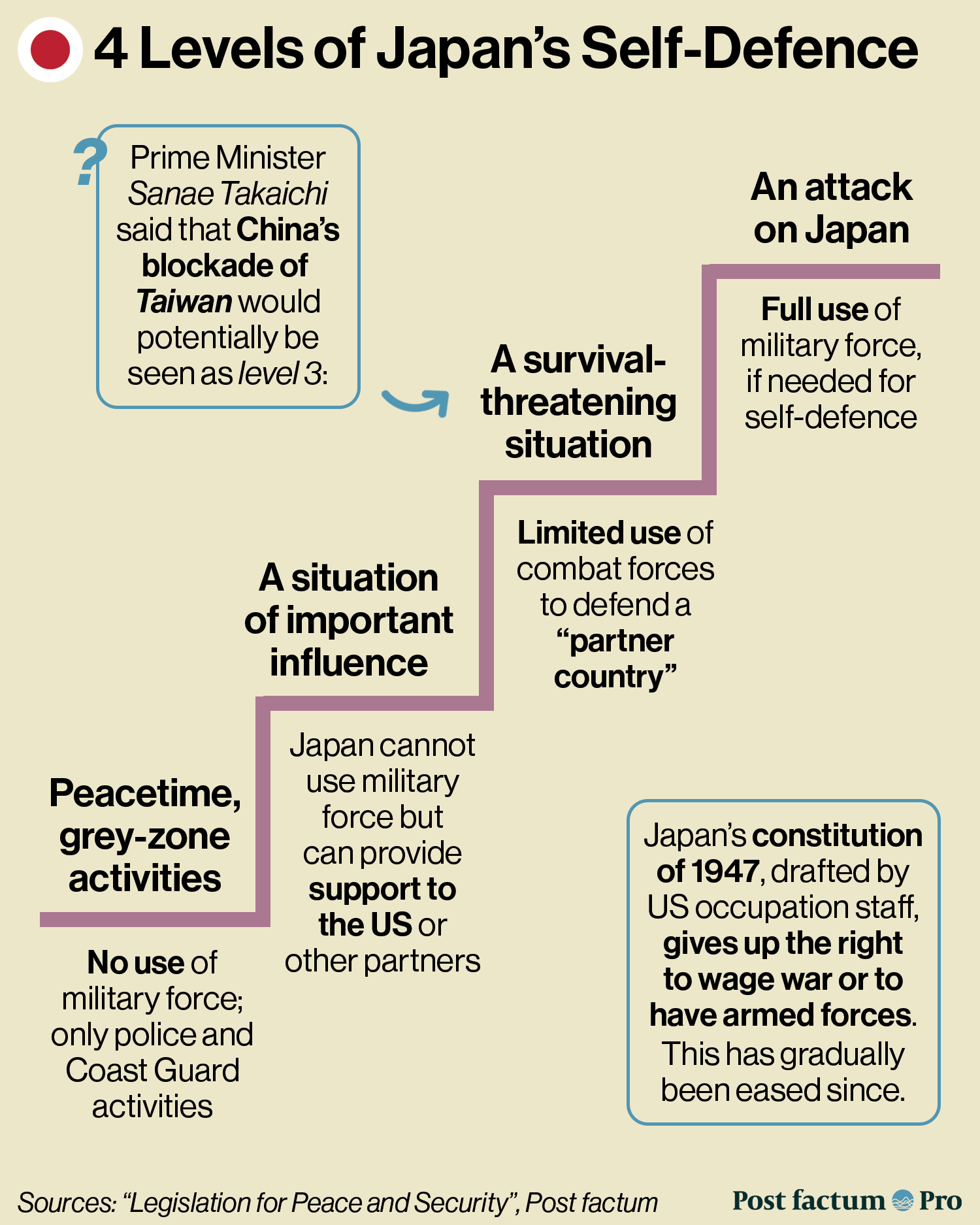
On 7 November 2025, Japan’s new prime minister, Sanae Takaichi, said that a potential Chinese blockade of Taiwan could be a “survival-threatening situation” for Japan.
Under a 2015 law, this means that Japan can use limited military force to defend a “foreign country in a close relationship with Japan”.
- Japan does not formally recognise Taiwan as a country, like most countries, to avoid tensions with China.
- Earlier prime ministers refused to comment on the issue.
- Takaichi’s comment may suggest that Taiwan counts as a country in the context of this law.
China demanded a retraction; Takaichi refused to retract, saying her words matched existing policy.
An economic and diplomatic conflict with China started.
China’s pressure campaign
China has set up economic and diplomatic measures against Japan:
- Tourism: citizens were advised not to travel to Japan; airlines told to cut flights.
- Seafood: imports of Japanese products stopped again, months after China partly lifted a 2023 ban linked to nuclear plant water release.
- Rare earths: shipments of dysprosium and terbium, used in magnets for cars and weapons, stopped from late 2025, the strictest form of China’s rare-earth controls.
- Military pressure: in December 2025, a Chinese fighter jet locked its radar onto a Japanese jet (one step short of firing a missile); in July 2026, a Chinese warship carried out military training inside a Japanese-claimed economic zone.
- Dual-use goods: the Japanese military and 40 companies and research bodies barred from importing Chinese products with both civilian and military uses.
- Trade: China set a reversible fee (import deposit) of 99% on a Japanese gas used to make computer chips.
- Diplomacy: sanctions on Japanese officials; most high-level contacts frozen; Takaichi referred to without her title.
The measures are targeting specific sectors, goods and people:
Overall trade with China grew 15% in the first half of 2026, with Japan’s exports up 14% and imports up 16%.
Visitors from mainland China fell by around 50% from December 2025, but total foreign arrivals were down only 5% in September 2026, as tourists from other countries replaced the demand.
After an earlier Chinese cut-off in 2010, Japan reduced China’s share of its rare-earth imports from 90% to under 70%.
- Japan still bought 99% of its dysprosium and terbium from China.
Japanese manufacturers can secure about 65% of their rare-earth needs into 2027.
Japan is diversifying supply: 75% of an Australian miner’s heavy rare-earth output is reserved for Japan, and a seabed rare-earth mining trial is planned for February 2027.
Japan has one of the world’s highest debt-to-GDP ratios.
Its cost of borrowing grew from around 0% in 2021 to over 3% in 2026.
Japan still plans to increase its spending, which we explained in our latest report on government debt.
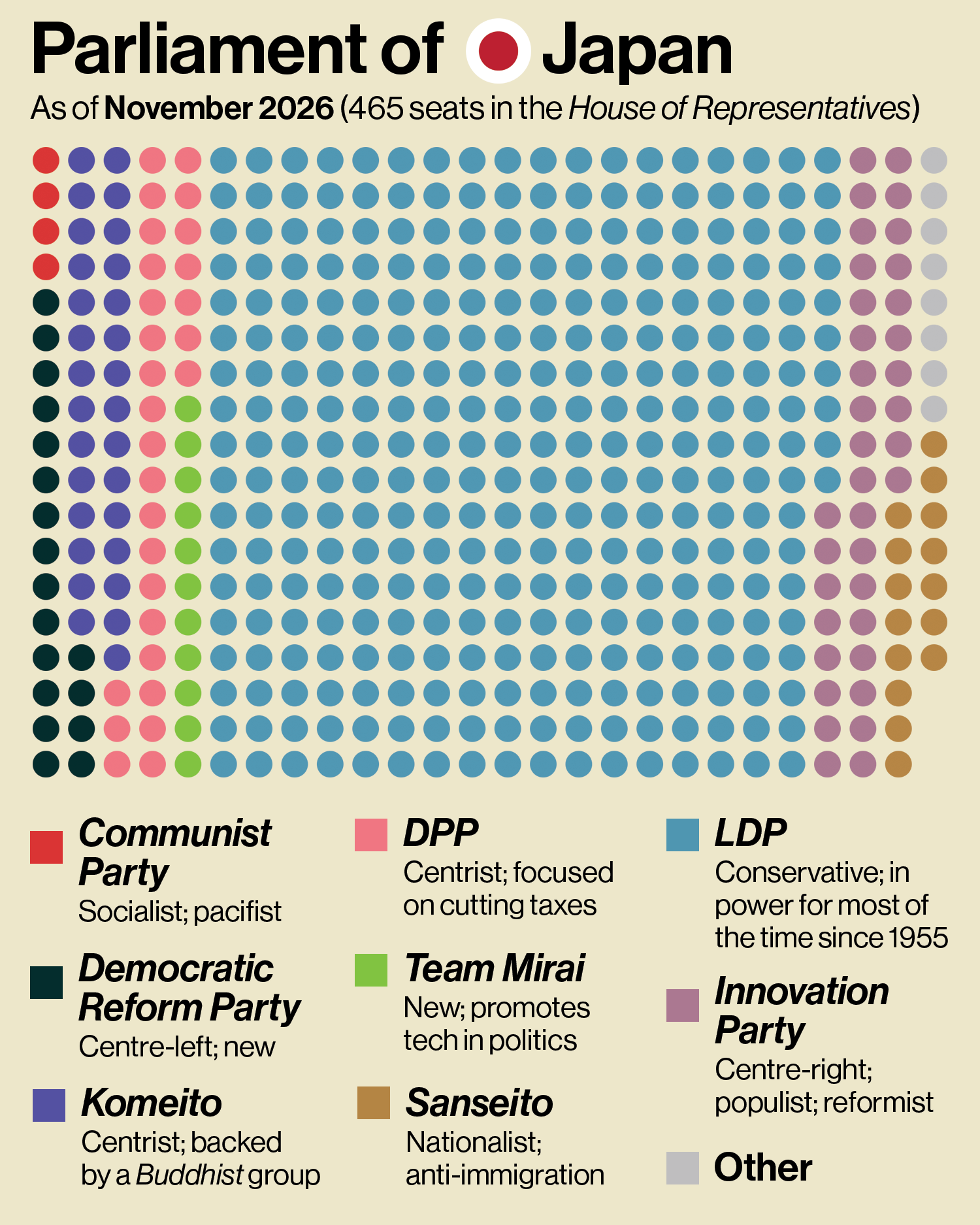
Takaichi’s party holds a supermajority (over two-thirds) of the lower house of parliament, allowing her to pass laws smoothly.
Her coalition has 120 of the 166 upper-house votes needed for constitutional amendments.
Japan’s militarisation
Japan’s constitution of 1947, drafted by US occupation staff, gives up the right to wage war or to have armed forces.
- Japan fought against the US in the Second World War and surrendered in 1945.
The constitution has never been changed (amended), so its ban on armed forces (Article 9) is still in the text.
The interpretation of the restrictions has loosened over time.
Under a 1960 treaty, the US must defend Japan and any territories under its administration.
- Japan hosts over 50,000 US troops.
Japan’s non-nuclear principles (1967) rule out having, making or hosting nuclear weapons.
A self-defence force was created in 1954, and 2015 laws allowed limited fighting to defend allies (never used so far).
Takaichi is rewriting Japan’s 2022 core security documents 6 years earlier than planned.
- She called the non-nuclear wording open for discussion, and her coalition partner wants to review the ban on hosting nukes.
Since April 2026, Japan has allowed exports of any military equipment, if the buyer country pledges to use it in line with the United Nations Charter.
- Japan cooperated with Australia and the Philippines on building and transferring warships.
Defence spending reached 2% of GDP in 2025 (including coast guard and other items).
- It stayed near 1% from 1976 to 2022, and Japan is considering 3.5%, as the US asks of its NATO allies.
The military has about 228,000 personnel, 92% of its planned size, and recruited only half its target in 2023.
Japan test-fired a US-made Tomahawk missile for the first time in July 2026.
Geopolitics
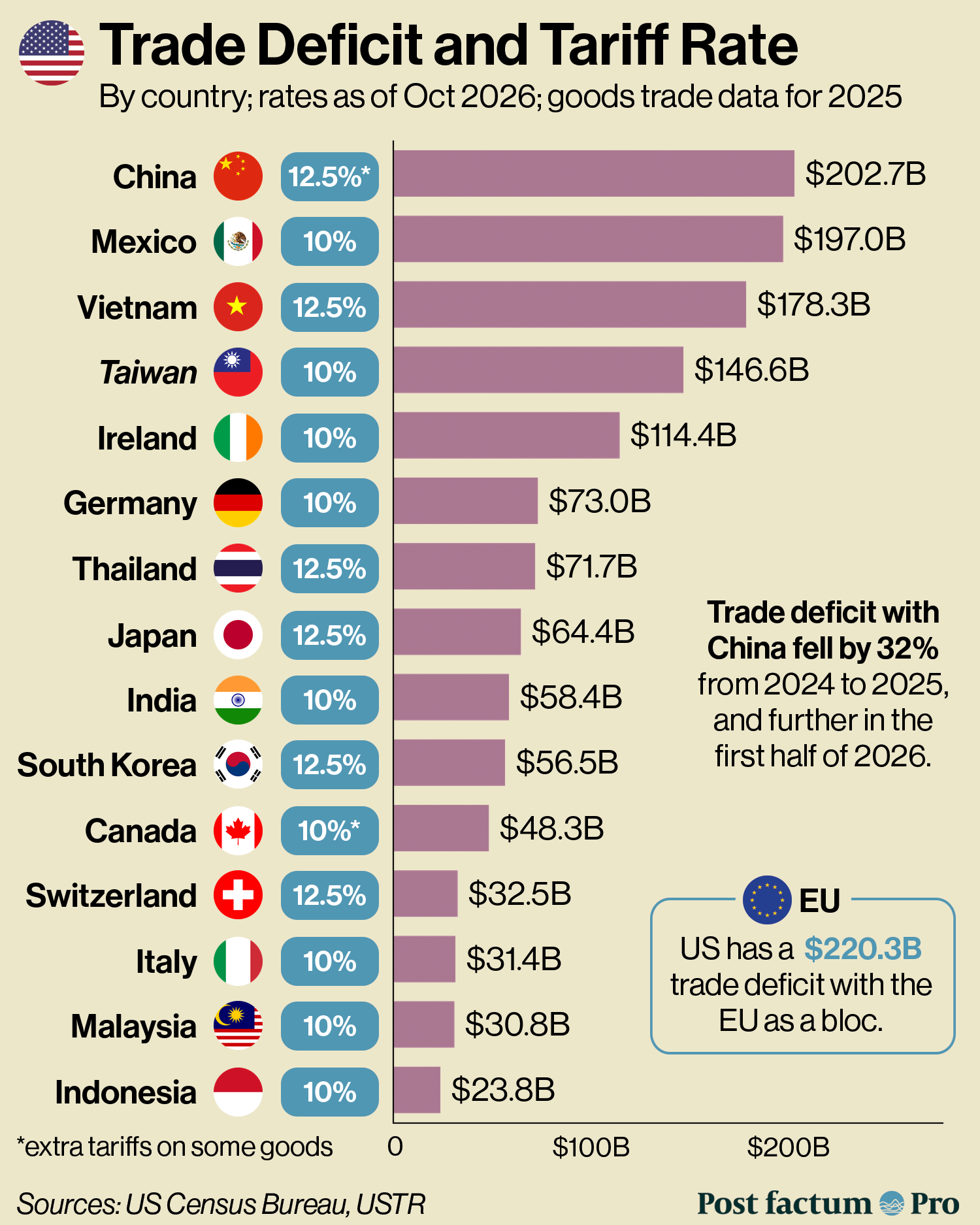
The US is Japan’s main ally, but Donald Trump still set extra tariffs on its exports and criticised it for not supporting the US war on Iran by sending warships into the Strait of Hormuz.
- A US-China trade truce (currently agreed until January 2027) left China’s measures against Japan in place.
China and Russia have increased joint military activity near Japan.
Vladimir Putin visited Russian-held islands claimed by Japan for the first time in August 2026.
In October 2026, Japan restated its 1972 position that it “fully understands and respects” China’s claim to Taiwan.
Earlier Chinese pressure on Australia and South Korea ended after a change of government or a carefully worded deal, not a reversal.
Thank you for reading!
Keep exploring: