
Afghanistan-Pakistan War, explained
India, China, Iran, US, Russia and ISIS
17 July 2026
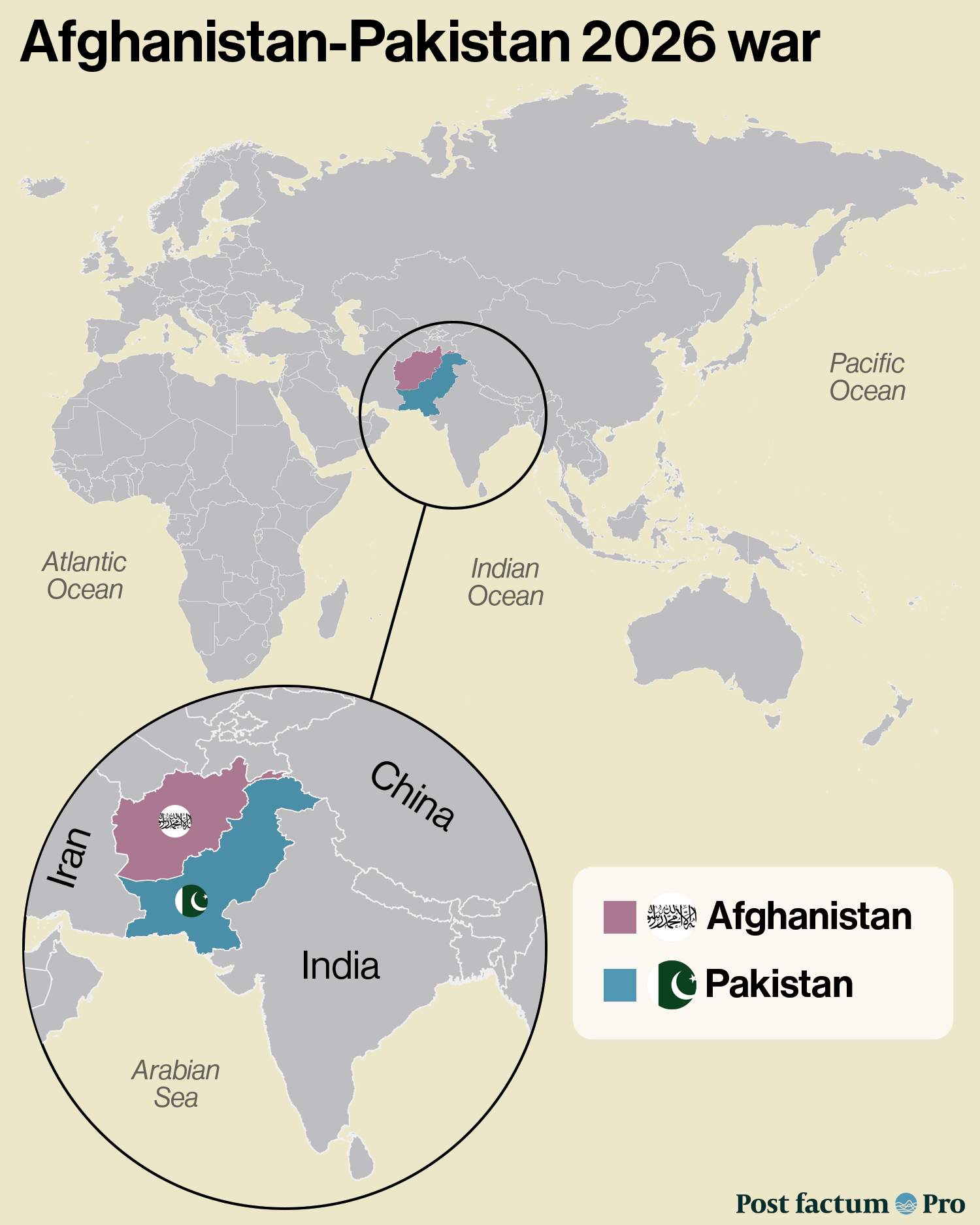
Afghanistan is ruled by the Taliban, a militant group that enforces a strict interpretation of Islamic law.
Pakistan previously supported the Taliban:
- Backed its rise to power in the 1990s.
- Sheltered its leaders for 20 years after the US invasion of 2001.
Why? Pakistan wanted to have more regional influence, especially against India, and to have a friendly government in neighbouring Afghanistan.
What went wrong?
At the centre of the conflict is the Pakistani Taliban (TTP), a militant group of around 6,000 fighters based in eastern Afghanistan.
- The TTP shares ideology with the Afghan Taliban but is a separate organisation that aims to overthrow the government of Pakistan.
When the Taliban returned to power in August 2021, Pakistan expected a friendly government on its border.
However, the Pakistani Taliban carried out hundreds of terror attacks on Pakistan.
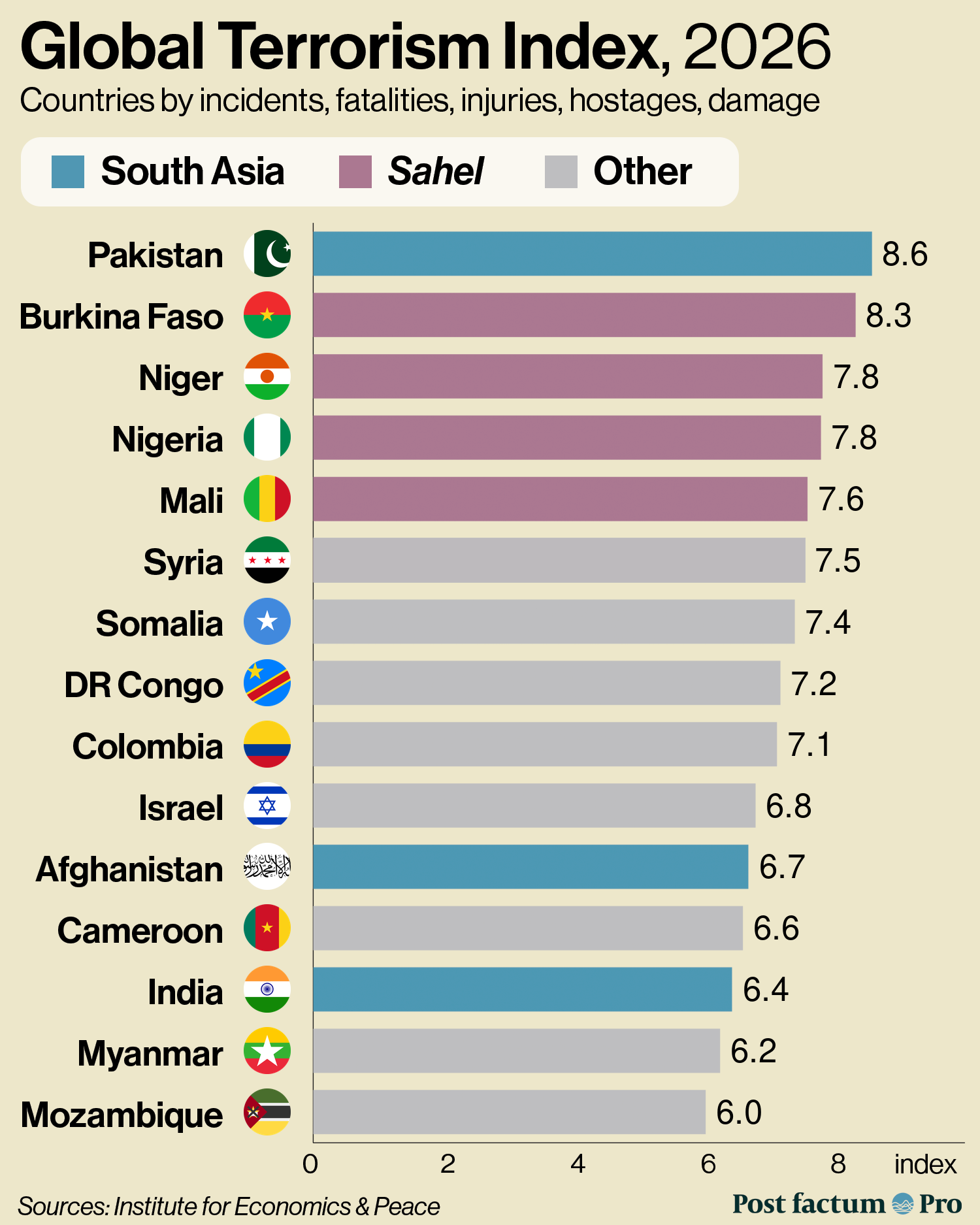
The TTP killed 637 people in 2025, its deadliest year since 2011, pushing Pakistan to the top of the Global Terrorism Index.
Pakistan accuses the Taliban of sheltering the TTP; the Taliban denies this and refused to act against the group.
Why does the Taliban not act against the TTP?
- It does not want to attack its ideological ally.
- It does not want to be seen as weak or influenced by Pakistan.
- Doing so risks pushing supporters to rival Islamist groups, like ISIS-K.
ISIS-K, a branch of the Islamic State, attacked both Afghanistan and Pakistan, as well as other countries, in recent years.
The Afghanistan-Pakistan border was drawn in colonial times and was never recognised by any Afghan government.
Pakistan first struck Kabul, the Afghan capital, on 9 October 2025, targeting the TTP leader, who later released an audio message to prove he survived.
The Taliban responded with artillery fire and attacks on border posts.
A ceasefire was mediated by Qatar and Turkiye. It lasted 4 months but negotiations failed, and Pakistan started a military operation against the Taliban, which responded in kind.
A day later, the war in Iran began.
Pakistan acted as a mediator in US-Iran negotiations while fighting its own war.
Pakistani airstrikes hit a drug rehabilitation hospital in March, killing at least 269 people. Over 450 civilians in Afghanistan died during this conflict so far.
Pakistan reported at least 153 soldiers and civilians killed during the war.
In June 2026, TTP carried out more attacks on Pakistan; it responded with new strikes that also killed at least 28 civilians.
Afghanistan then attacked Pakistani territory with drones, claiming to target an ISIS-K centre.
Geopolitics
India and Pakistan fought a short war in 2025.
Both India and Pakistan are accused of supporting terror groups acting against the other side.
India built closer ties with the Taliban without formally recognising it.
- India upgraded its Kabul mission to an embassy in October 2025; a Taliban diplomat took charge of the Afghan embassy in India in January 2026.
India also sent aid: over 50,000 tonnes of wheat since 2021, and multiple humanitarian shipments during 2026.
An Afghan airline began daily flights between Kabul and India’s capital in June 2026.
The war closed the border, ending about $2 billion a year in trade.
India became Afghanistan’s main export market: $755 million in 2025, up 23%, traded through a port in Iran which was recently damaged by US airstrikes.
Iran became Afghanistan’s largest trading partner overall with $3.5 billion turnover.
At the same time, it expelled over 3 million migrants back to Afghanistan.
Over 2.5 million Afghans returned from Pakistan in 2023-2026, some deported and some leaving under pressure.
The resulting population growth in Afghanistan is causing an increase in poverty while total GDP rose.
China, with around $65 billion of infrastructure projects in Pakistan, became the main mediator.
China hosted week-long talks on its territory and raised the issue of armed groups on its western borders operating from Afghanistan.
Russia is the only state to recognise the Taliban government (doing so in July 2025).
In May 2026, Russia and the Taliban signed a military agreement, the details of which are unknown.
Thank you for reading!
Keep exploring:


