
Israel-Hezbollah War, analysed
Effects of the 2024 campaign, and an Iran-backed rebuild
Published: April 9, 2026
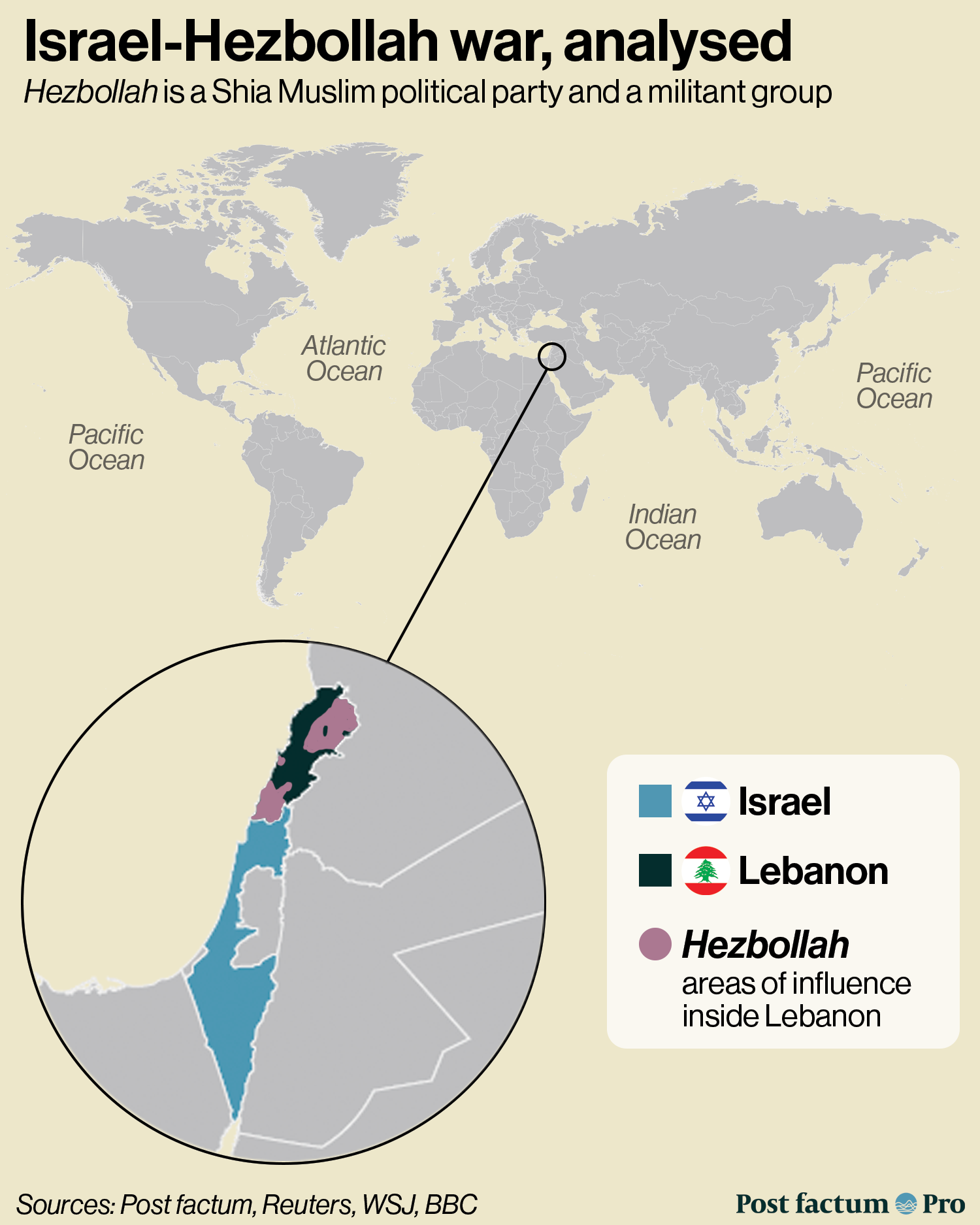
Hezbollah is both a political party and a militant group. It acts as a “state within a state”, providing social services in Shia-majority areas of Lebanon.
It was formed in 1982 with support from Iran to counter Israel and US influence in the Middle East.
In 2024, Hezbollah fought a war against Israel as part of the wider war in Gaza.
Israeli operations killed up to 10% of Hezbollah’s fighters, including most of the senior commanders, and destroyed up to 80% of its rocket stocks.
In March 2026, Hezbollah started a new campaign against Israel after the US and Israel attacked Iran.
The 2024 war
Hezbollah started firing rockets and drones at Israel in support of the Palestinian group HAMAS in October 2023, forcing about 60,000 Israelis in the north of the country to move.
Israel's goals were (1) to return its displaced residents and (2) to reduce Hezbollah's military power.
Before the war, Hezbollah had over 150,000 rockets and missiles, making it the most armed non-state group in the world.
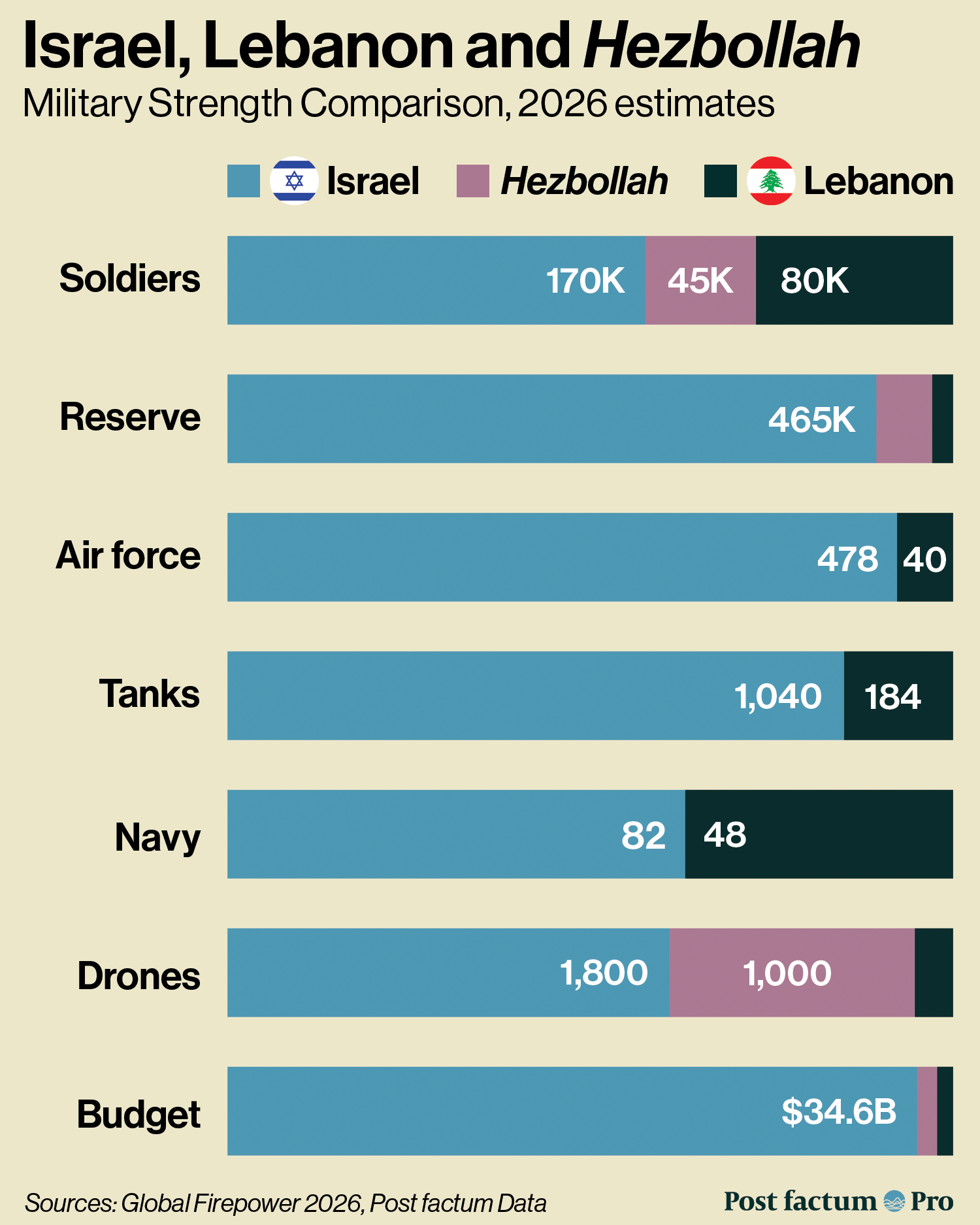
It also had around 50,000 active fighters and a theoretical ability to launch up to 3,000 rockets per day, overloading air defences.
Israel's campaign included air strikes across Lebanon and a ground invasion of southern Lebanon starting in October 2024.
In September 2024, explosive devices hidden in pagers and radios used by Hezbollah detonated, killing 42 people and injuring about 4,000, including some children.
The overall campaign weakened Hezbollah:
Manpower: up to 5,000 fighters killed and 13,000 wounded, out of a maximum of 100,000 fighters before the war.
Rockets: up to 80% of the group's rockets were destroyed, especially the heavier and long-range missiles.
Leadership: most senior commanders were killed, including the group’s leader, forcing a re-organisation.
Infrastructure: Israel destroyed over 50 tunnels in southern Lebanon, but the exact damage is uncertain.
Over 4,000 people were confirmed killed in Lebanon during the war, including both fighters and civilians, and 1.2 million were displaced, some moving to Syria.
Damage to Lebanese infrastructure was estimated at $3.4 billion, with about 100,000 houses and over 60 schools destroyed.
The cost of reconstruction is estimated at $11 billion.
On the Israeli side, 75 soldiers and 45 civilians were killed.
Longer-term effects
A ceasefire took effect in November 2024, brokered by the US and France.
The deal: Hezbollah was to withdraw north of the Litani River, about 30 km from the border, and the Lebanese army was to take control of southern Lebanon.
Israel was to withdraw within 60 days, but stayed beyond the deadline, keeping troops on 5 hilltop positions in southern Lebanon.
Iran began to rebuild Hezbollah's forces soon after the ceasefire.
Assad's fall in Syria
Syria under Assad was Iran's main route for sending weapons to Hezbollah.
In December 2024, Assad's government fell after a rebel offensive.
The new Syrian government started blocking Iranian weapon shipments to Hezbollah.
Disarming Hezbollah in Lebanon
Since 2008, Hezbollah and an allied Shia party have held over a third of the ministerial seats in Lebanese governments, which allowed them to block any decisions.
After the war, and with US diplomatic pressure, Hezbollah lost this power in the new Lebanese government formed in 2025.
In September 2025, the new government approved a plan to disarm Hezbollah.
The Lebanese army had made progress in disarming Hezbollah south of Litani.
However, Hezbollah was able to delay and resist disarming in the rest of the country.
The poor economic situation in Lebanon limits the government’s ability to pay the army, which reduces its loyalty.
Shia Muslim communities may have to rely on Hezbollah for social support due to the economic crisis.
Iran-backed rearmament
Iran sent $1 billion to Hezbollah in 2025, funding its budget of over $50 million per month.
Iran also sent around 100 military officers to train Hezbollah’s fighters and rebuild its command structure.
The top-down command was replaced with a system of smaller independent groups.
Hezbollah rebuilt about one-fifth of its pre-war weapons stocks by smuggling equipment and producing it locally.
By early 2026, Hezbollah had about 25,000 missiles and rockets.
The 2026 Iran war
On 28 February 2026, the US and Israel launched a military campaign against Iran, killing Iran's supreme leader.
Two days later, Hezbollah fired rockets and drones at Israel in response.
On peak days, over 100 weapons were launched at Israel, about half of what Hezbollah reached in 2024.
So far, over 1,300 people have been killed in Lebanon, militants and civilians combined, and over 1 million people have been displaced.
At least 400 Hezbollah fighters were killed, and at least 10 Israeli troops.
In March 2026, Hezbollah used FPV drones for the first time, attacking Israeli tanks.
FPV drone: controlled remotely by an operator who sees through the drone's camera; a low-cost targeted explosive weapon.
Israel announced plans to control a buffer zone south of the Litani River, covering about 8% of Lebanese territory, after the end of the conflict.
Thank you for reading!
Leave a comment below:
(you have to be logged into our Community)