
RUSSIA: UKRAINE’s INVASION of Kursk
Published: June 12, 2025
Important! This report follows the outdated format of Post factum Pro.
Back then, we focused on analysing how other media outlets covered the event.
Let us know if you want to see more of something like this!
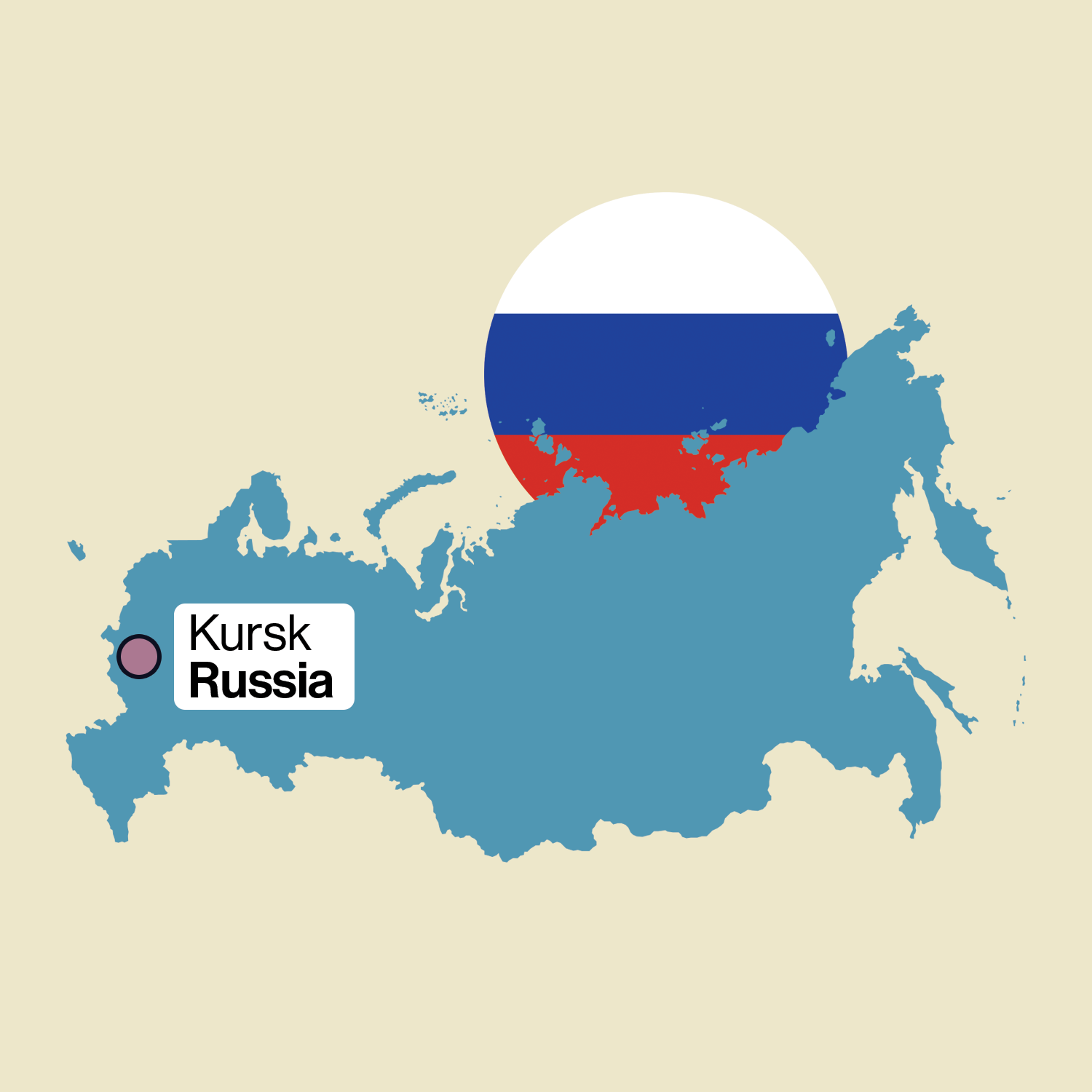
On August 6, 2024, Ukraine’s army broke through the Russian border in the Kursk region, eventually capturing around 1,000 square kilometres of territory.
This came as Russia was having battlefield success along the frontline in Eastern Ukraine.
In this report, we analyse how Russian, Ukrainian and international media covered the event, and then discuss how the situation actually played out.

The Kyiv Independent.
Centre-left: Slightly favours a liberal perspective.
English-language: Focuses on global audiences.
Independent of Ukrainian government, critical of its wartime censorship.
The Kyiv Independent (KI) opens by quoting Vladimir Putin who calls the events in Kursk “a large-scale provocation”. This points to the fact that he acknowledges that something significant is happening.
The article then says that Russian officials reported clashes with Ukraine’s army on “Russian soil”.
This is significant to KI’s Ukrainian readership, as the country’s military has been fighting a defensive war on its own territory throughout the entire conflict.
KI then gives some context, reporting that Kursk region borders with Sumy region of Ukraine, highlighting that:
Sumy experienced daily attacks by Russia
Sumy region was liberated in April 2022
Ukraine did not attack Russian territory before that
It is true that Russia has actively bombed Sumy throughout the invasion of Ukraine.
It is also true that the region was liberated of Russian forces in April 2022. Russian officials have called it a planned withdrawal and a “gesture of goodwill”.
However, the claim about Ukrainian attacks on Russian territory is misleading.
While there are limited reports of attacks on Kursk region specifically before April 2022, the Ukrainian army did conduct strikes on Russian territory.
For example, on the second day of the invasion, Ukraine struck a Russian airbase in Rostov region with a missile, destroying a fighter jet.
The article then quotes Russian official reports of “five people killed, and at least 20 people injured” without clarifying if those are civilians.
It also reports that “Putin claimed that Ukrainian soldiers are carrying out attacks on civilian facilities”. KI adds that “these claims cannot be independently verified”.
The article wraps up by discussing Russian losses of two helicopters and two tanks in the Kursk region.
Most of these losses were independently verified but the article does not mention any Ukrainian losses.
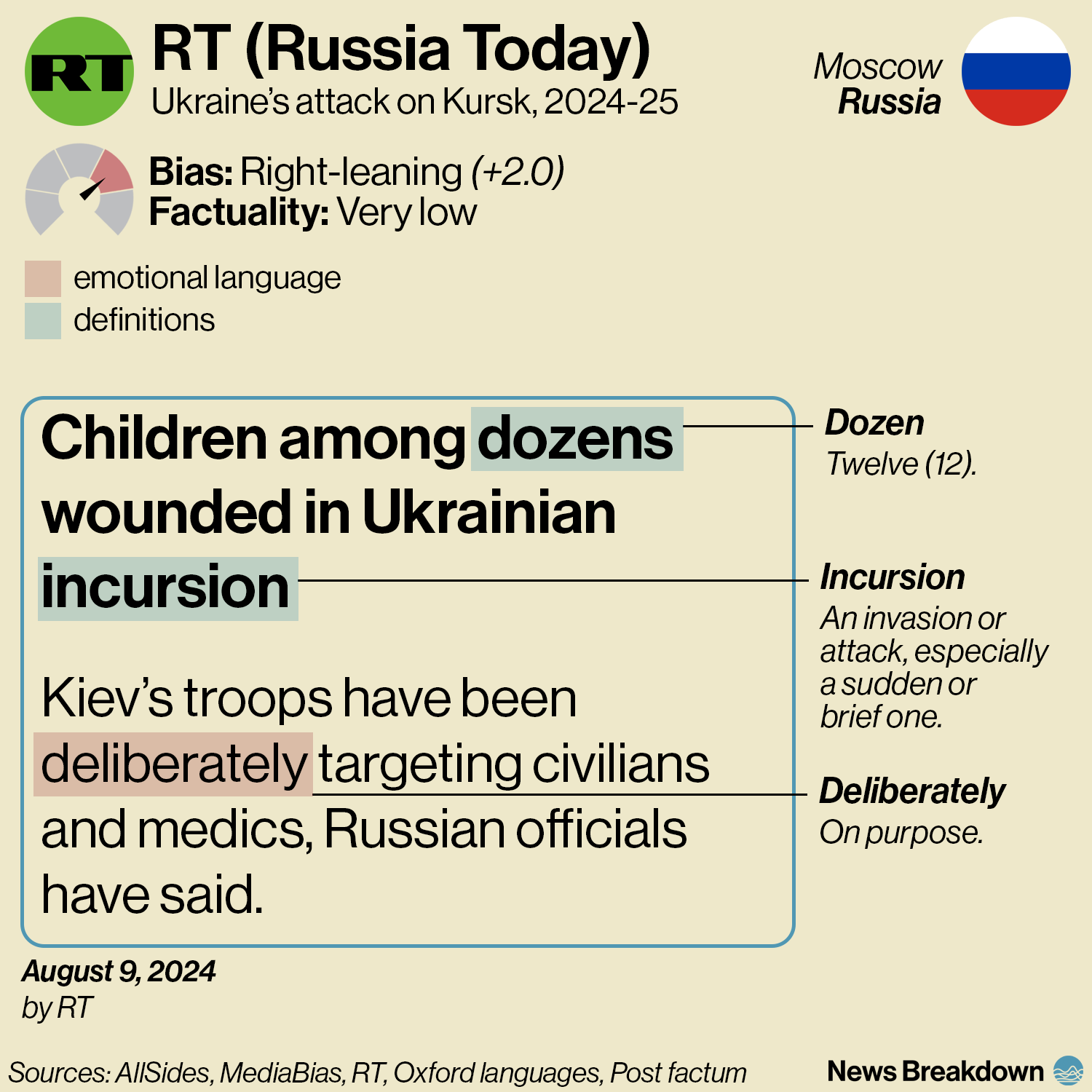
Russia Today (RT).
State-controlled: funded and directed by the Russian government.
International: broadcasts globally to promote Russian official narratives.
The headline by RT talks about civilian casualties, quoting a Russian official.
It also mentions that children were injured, which would trigger further anger at Ukraine’s actions from the readers.
RT then suggests that the attack was “repelled” (stopped), also quoting official statements.
Confirmations of some civilian casualties and multiple injuries did appear later.
However, there is no evidence that Ukrainian soldiers attacked or executed any civilians.
There is verified evidence of Ukraine striking civil infrastructure in Kursk. In some cases, there is also verified evidence of Russian troops entering this infrastructure before the strikes.
The text says that “Kiev’s troops launched an unsuccessful cross-border incursion”.
RT uses the spelling “Kiev” for Ukraine’s capital city, which was the commonly accepted spelling in the Soviet period. In Ukraine, this spelling is viewed negatively as it is associated with Soviet policies to discourage the use of Ukrainian language, in favour of Russian.
Ukraine promotes the spelling “Kyiv” which is a legal requirement since 1995. Later, it pushed for international adoption of the spelling which is now widely accepted by international media.
RT reports that Ukraine lost 20 “fighters” in the attack (meaning soldiers). It does not mention any Russian losses.
RT concludes by discussing the Russian Volunteer Corps (RDK), a group of anti-Putin Russian citizens fighting for Ukraine. They launched short-term raids into Russian territories earlier in 2024.
The article shares unverified claims that the RDK was involved in the Kursk offensive. It was later confirmed that it did not take part.
RT calls RDK a “right-wing extremist militia force” and clarifies that it is considered a terrorist organisation in Russia. The group’s leader is a Russian neo-Nazi and a football hooligan, who owns a clothing brand popular among white supremacists and was banned from the Schengen Area in 2019.
Russian officials often claim that Ukraine’s government is controlled by a neo-Nazi regime. Connecting RDK with Ukraine’s actions in Kursk promotes this narrative.
One of the goals of the Russian invasion is stated as “to de-Nazify” Ukraine.
Ukraine’s far-right parties received 2% of votes in the last democratic election in 2019, less than some far-right parties in other European countries such as Italy where Fratelli d'Italia won 26% of votes.
However, some of the few far-right Ukrainian parliamentarians have made extreme remarks, including anti-Semitic and nationalist rhetoric.
In addition, the country has a complex political history, with many celebrated Ukrainian nationalists, such as Stepan Bandera, having a history of collaboration with the Nazi regime during its occupation of Ukraine in the 1940s.
During this period, many anti-Soviet and nationalist groups sided with Nazi Germany.
Some Ukrainian military units including the Azov Brigade were born out of ultra-nationalist volunteer groups.
In turn, Russia also has a long history of managing neo-Nazi groups in the country.
For example, the neo-Nazi Rusich Group is a military unit fighting against Ukraine since 2014.

The Washington Post (WP).
Centre-left: Openly supported Democratic Party presidential candidates since 1976.
Libertarian: Since 2025, opinion pieces promote “personal liberties and free markets”.
Jeff Bezos: Owned by the Amazon boss since 2013.
The WP article focuses on the use of US-supplied arms in Ukraine’s operation, and the Biden administration’s approval of their use on Russian soil.
It mentions the use of Western-supplied weapons in the headline, the strapline, and 4 times in the first 5 paragraphs of the text.
The article mentions three potential reasons for the operation:
“Bring war to Russia”: influence public opinion on war in Russia.
“Divert troops”: draw Russian reserves from other areas of the frontline.
“Gain leverage”: improve negotiating positions by controlling Russian land.
Before including any comment from Russia the article prioritises comments from German officials confirming their support for German weapons striking targets inside Russia.
The weighting of sources in this article frames Western-supplied arms as the key to Ukraine’s military successes and creating a path to peace.
Jeff Bezos, the owner of the Washington Post and Amazon, receives government funding across his businesses. This includes defence contracts for the launch of military satellites through his Blue Origin company.
The article mentions reports that Russian civilians are having difficulties evacuating from the region but does not mention any reports of potential casualties or injuries.
WP briefly mentions groups like the RDK, calling them “volunteer militant groups opposed to President Putin”.
WP concludes by saying that Ukrainian officials are pushing to improve their negotiating positions, fearing that Donald Trump’s (potential) election would cut off military support. It mentions that the last large package of aid was “held up by Republicans in Congress”.
At the time, Donald Trump was campaigning for the US Presidency on the promise of securing a quick end to the war in Ukraine.
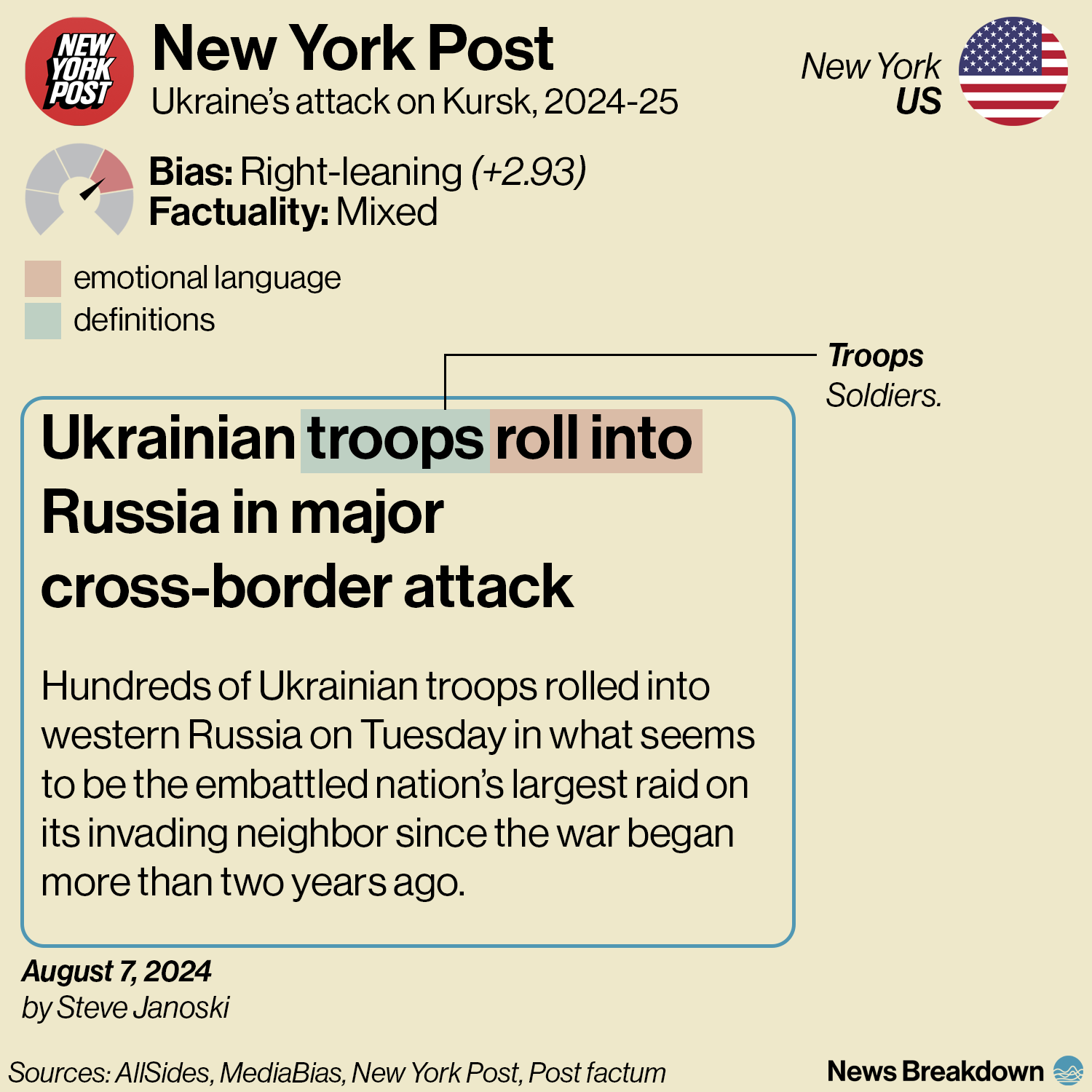
New York Post.
Conservative: leans towards covering topics of interest to the Republican voters.
Tabloid: focuses on sensationalism and controversial headlines.
The article opens by establishing that the Kursk attack took place as Russia is invading Ukraine.
NY Post does not specifically mention the use of Western-supplied weapons.
It quotes Russian officials to say that Ukraine deployed 300 troops, 11 tanks and 20 armed vehicles.
While the quote is correct, we now know Ukraine deployed a much larger force into Kursk.
The article reports that Ukraine entered the “village” of Sudzha, which is actually a town and the local administrative centre.
The NY Post calls the operation a “mini-invasion” and mentions that Vladimir Putin described it as a “large-scale provocation”.
It mentions that Russian officials claim to have stopped the attack but suggests that independent reports show this to not be true.
The article also reports the Russian official statements of two civilian casualties and multiple injuries.
It suggest some potential reasons for the incursion:
Relieve pressure from other areas of the frontline.
Prevent an offensive by Russia into the Sumy region of Ukraine.
Get a bargaining chip in the form of captured territory.
It does mot mention the potential morale-boosting effect of the initial success in Kursk.
The article also mentions reports that Ukraine may have wanted to capture the Kursk Nuclear Power Station nearby but suggests that it did not deploy a force large enough to achieve this. Ukraine did not seize the power plant.
Ukraine ended up capturing around 1,000 square kilometres of Russian territory in August 2024.
Ukraine was also able to capture hundreds of prisoners of war to exchange for its nationals held in Russia.
By September, the frontline in Kursk stabilised, with Ukrainian holdings dependent on a few key roads for supplies.
Through autumn and winter, Russian forces began slowly recapturing the Ukrainian-controlled territory.
By October 2024, around 10,000 North Korean troops arrived in Kursk to fight against Ukraine.
Russia actively used its latest development: fibre optic drones. These are (usually FPV) drones that fly connected to a very long cable which allows them to be immune to signal jamming devices.
Fibre optic drone strikes efficiently destroyed Ukraine’s armoured vehicles and endangered its supply lines in Kursk.
In February 2025, US military aid to Ukraine was paused, which restricted the availability of some munitions in the short term, but the frontline in Kursk was already falling by that time.
In March 2025, Russia was able to recapture most of the territory in Kursk.
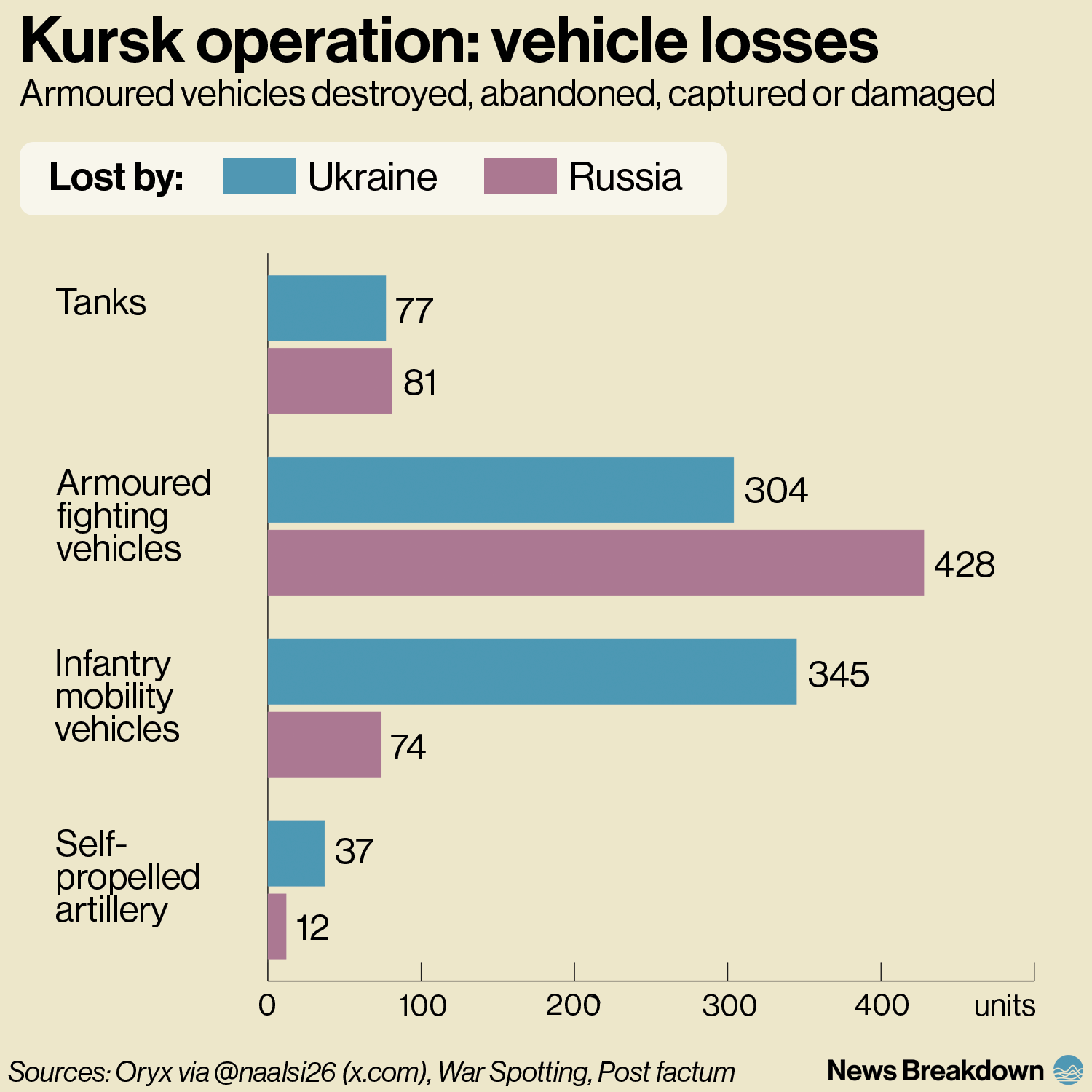
Ukraine suffered significant losses in troops and vehicles, especially during the retreat from Kursk, as analysts suggest that it was delayed to the point where supply lines were too unsafe.
Did Ukraine receive a bargaining chip?
As the territory was lost, the operation no longer provides leverage for negotiations.
Did Russia redirect its forces to Kursk?
Russia deployed additional troops to the region, but they were taken from secondary directions. In addition, Russia was able to use North Korean troops.
Russia did redirect some glide bombing capacity to Kursk, as well as deploying its best drone strike groups to the region.
It deployed some of its elite troops, such as marines and paratroopers, who suffered losses. However, this is also true for Ukraine which sent some of its best forces to Kursk.
The Russian army only sped up its advances in the Donbass following the Kursk incursion.
There were also reports of increased volunteer enlistment for the Russian army.
Did the Kursk operation boost Ukrainian morale?
While this effect is hard to measure, the short-term effect seems to have been a boost in morale. However, as the operation did not develop into a major success, the longer-term effect on morale is unclear.
Did Ukraine prevent an attack from Kursk?
Russia did not conduct an offensive on Sumy during the incursion.
However, in May 2025, after recapturing the Ukrainian-controlled land in Kursk, Russia began a large-scale offensive in the Sumy region of Ukraine.
As of June 2025, Russian forces are within 30 kilometres of Sumy, the city.
Authors Anton Kutuzov, Finlay Dunseath